
Our Team
The Systems Alignment Innovation Hub is powered by a team of Co‑conspirators, Builders, Weavers, Guides, Storytellers, and Researchers committed to advancing community‑driven solutions. We bridge rigorous academic inquiry with lived expertise, ensuring knowledge moves in both directions (between community and academy). Shared knowledge, equity, and collaboration remain the foundation of our model.
As SAIH enters its final phase, our focus is on maximizing resources availabile to our grantees including technical assistance, strengthening capacity, and supporting a thoughtful, community‑centered adjournment. We have welcomed Teddy McGlynn‑Wright, Kirsten Harris‑Talley, Bathabile K.S. Mthombeni, J.D., M.S.LOD, Dr. Allison Stephens, and Allecia Harley as our newest collaborators. They bring deep commitments to racial equity, sustainability, community leadership, academic rigor, and lived experience.
Every month, they will lead webinars, community learning sessions, and 1:1 support. As SAIH sunsets, we are working with intention to meet grantees where they are and support their self‑defined goals for growth, connection, learning, and impact.

Director of SAIH
Dr. Espinoza (she/her) is a passionate Pracademic (Practice/Academic). She serves as the Director of SAIH. Dr. Espinoza believes in making information relevant and easy to digest. She is happiest breaking down barriers to research and creating new ways to learn, share, and collaborate. She leads SAIH's Research Strategy, Digital Communication, Academic Impact, and Grantee Dissemination work.

Deputy Director of SAIH
Dr. Brittney Nathaniel (she/her) is a PhD researcher with expertise is in higher education with non-traditional students, learning content creation, workshop design/development, and delivery of research related topics. She has worked in making higher education more accessible in both the US and abroad.

S4A Technical Assistance Lead
SAIH Technical Assistance Consultant/Collaborator
Dr. Smith (she/her) will be leading learning engagements focusing on sustainability, research methodology, community involvement, and research dissemination. Dr. Smith will lead S4A's TA and also be available for 1:1 consultation for SAIH grantees.

Technical Assistance Collaborator/Consultant
Dr. Preston (he/him) will be leading learning engagements focusing on sustainability, research methodology, community involvement, and research dissemination.

Bathabile is a coach, mediator, and the founder of Untangled Resolutions, providing external ombuds and mediation services, workshops, process facilitation, and leadership coaching. Untangled Resolutions also provides DEIB-informed complaint and conflict management system design and implementation services to schools and other organizations.
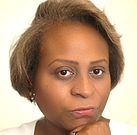
Technical Assistance Collaborator/Consultant
Dr. Stephens will bring a range of topics to discussion including: Sustainability, research frameworks, research methodology, and implementation science.
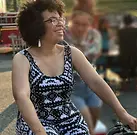
Kirsten Harris-Talley (she/her) is a Belonging-Based Facilitator, community educator, artist, and healer based in Seattle, WA; Occupied Duwamish Territory. She feels blessed to have been raised by community in activism circles; doing reproductive justice, anti-racism, and non-profit social change work over the last 25 years. She has also been active in political change and previously served as a legislator as a Washington State Representative for Southeast Seattle, and a Seattle City Council Member.
Kirsten is committed to collective liberation and as an abolitionist - believes in a future without slavery, incarceration, or authoritarian control.
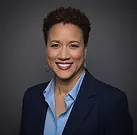
Technical Assistance Collaborator/Consultant
Focusing on Sustainability, communications, and development. Allecia leads many of the Learning Sessions and is available for 1:1 support.
.webp)
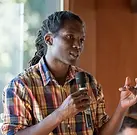
Teddy McGlynn-Wright (he/him) is a Belonging-Based Facilitator, politicized healer and award-winning professor, formerly of the UW School of Social Work. He currently directs a trauma-informed schools project in New Orleans, LA. When working with clients, (individuals and organizations), Teddy uses a body-based (or somatic) approach to healing and transforming systems that break people, families and communities.
His three main areas of work— teaching, trauma-stewardship, and facilitation, inform and are informed by one another.

Leeia Hutchinson (she/her) InTuWork
Leeia is a community and social media manager, content strategist, and
education technology founder from The
Bahamas. She earned a bachelor’s degree in Music Education and spent more than 10 years working as an educator before transitioning into digital community building and online marketing. You will see Leeia at IntuWork Learning Sessions, on Circle.So, and she supports the SAIH Newsletter!

Colleen Chalmers (she/her)
Colleen joins SAIH to support administrative and program coordination, bringing extensive experience working with Native American and Alaska Native communities and equity‑focused organizations across the Pacific Northwest. She is Native (Métis) on her mother's side. Her background includes roles with Chief Seattle Club, Equity Matters, National Urban Indian Family Coalition, Native American Youth & Family Services, Pike Place Market Foundation, and KCRHA.